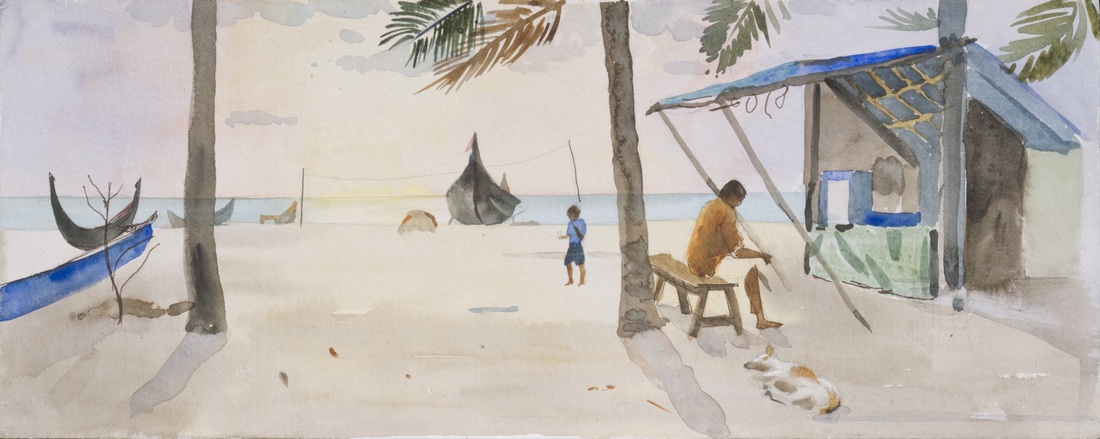
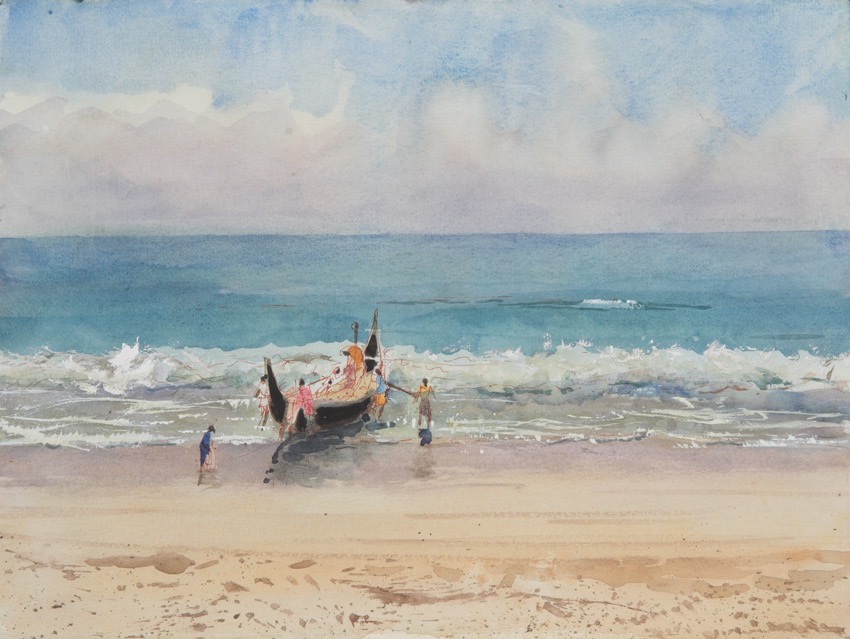
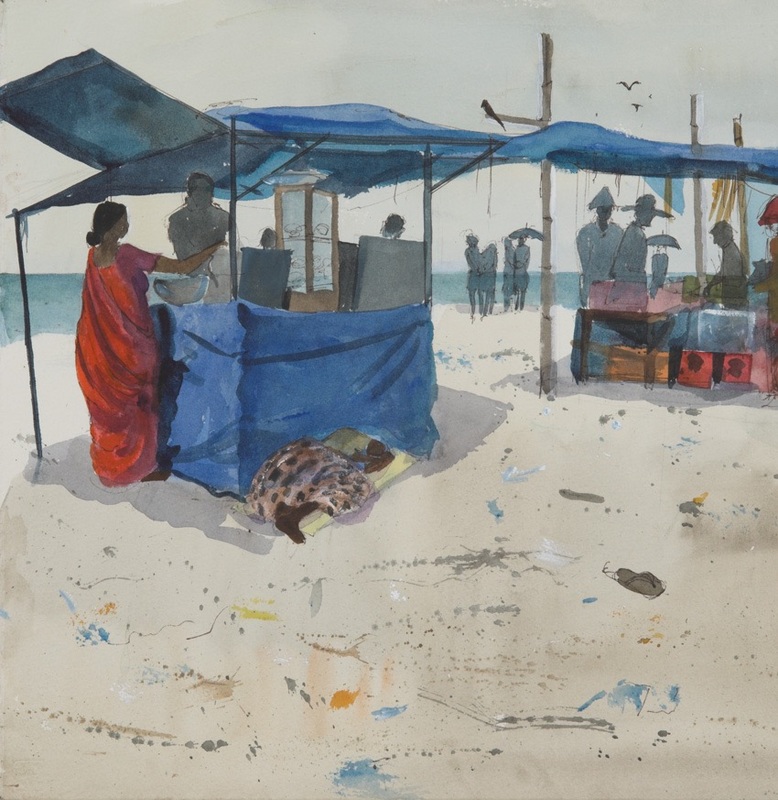
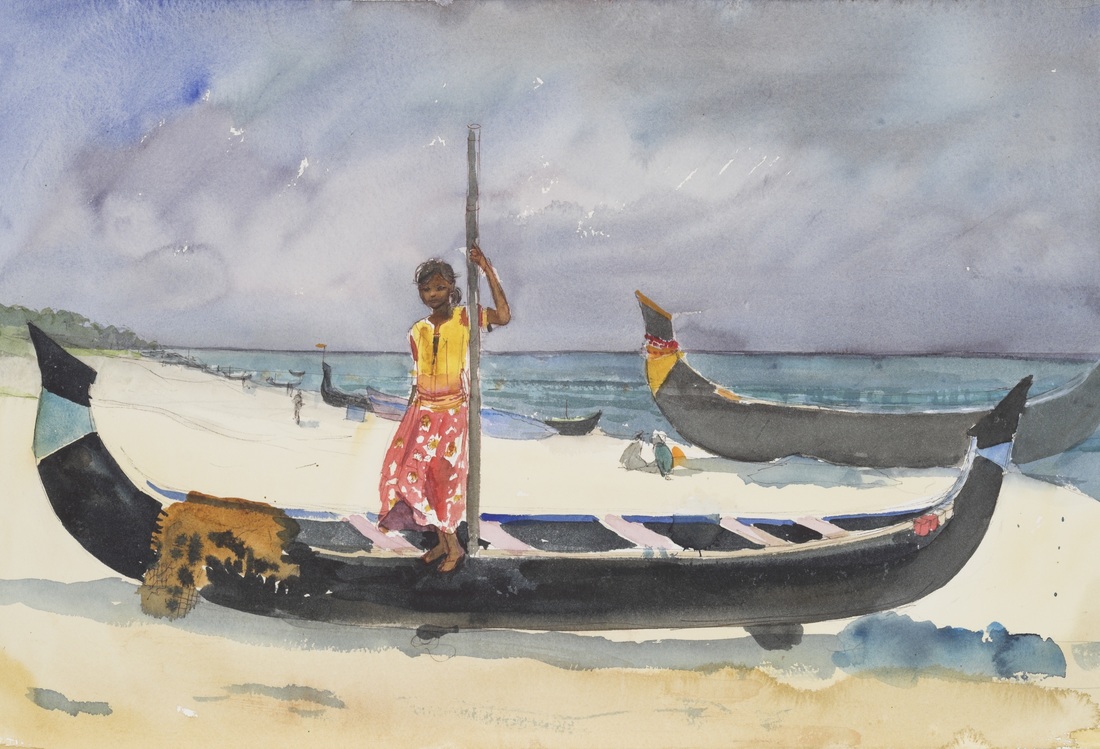
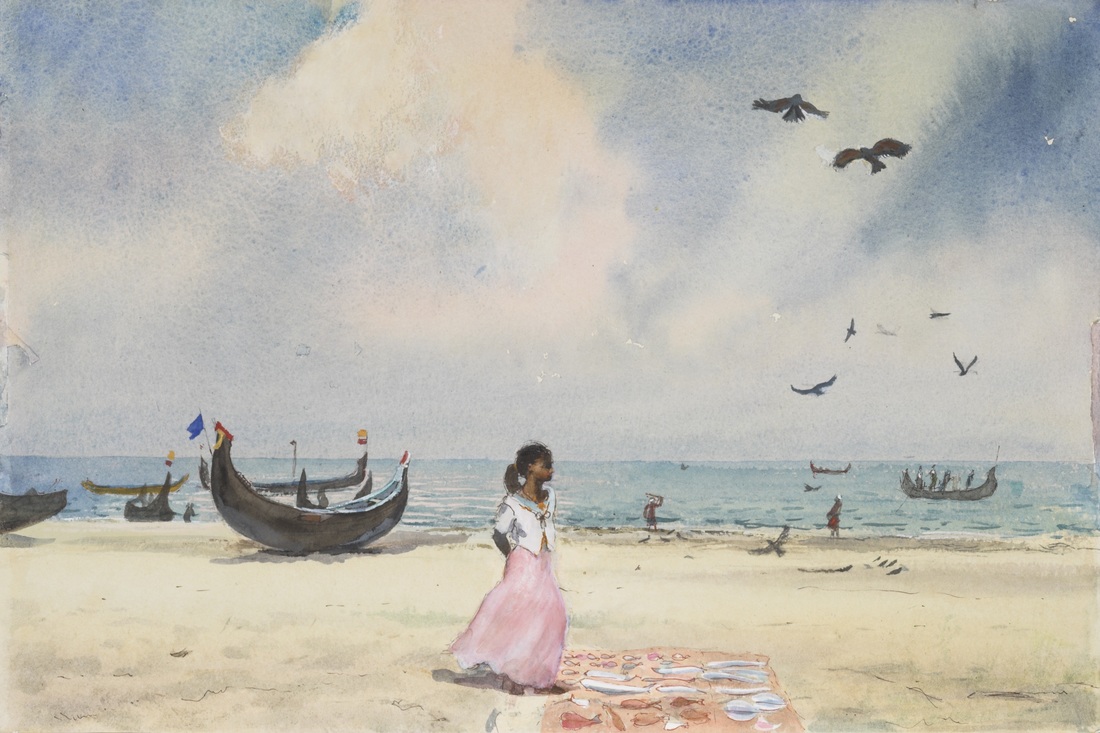
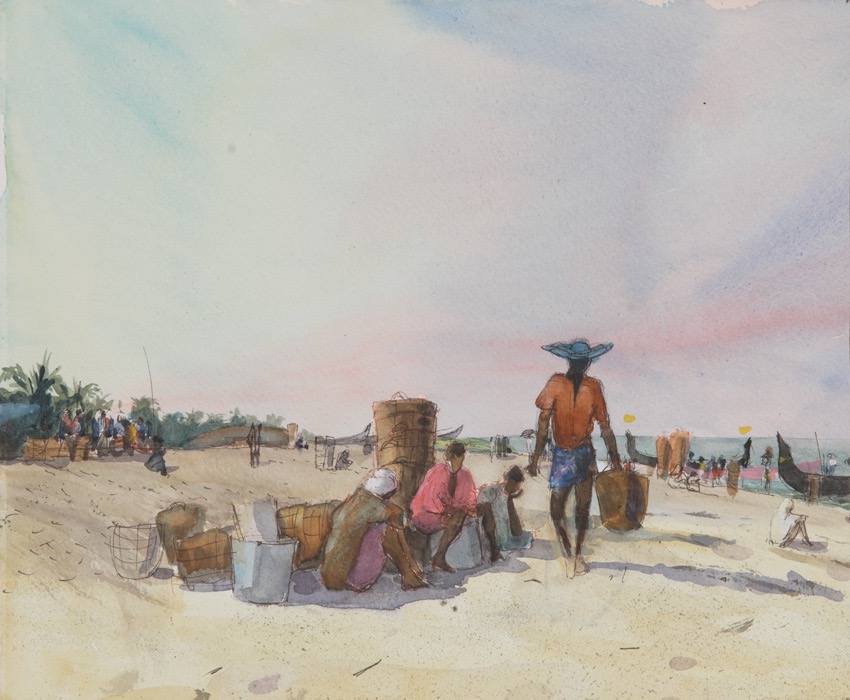
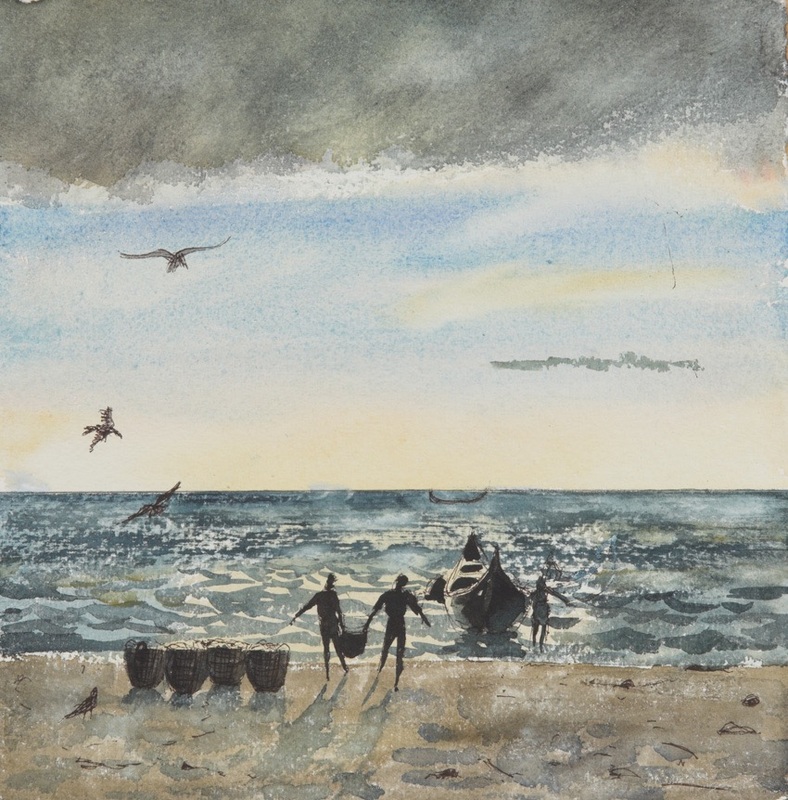
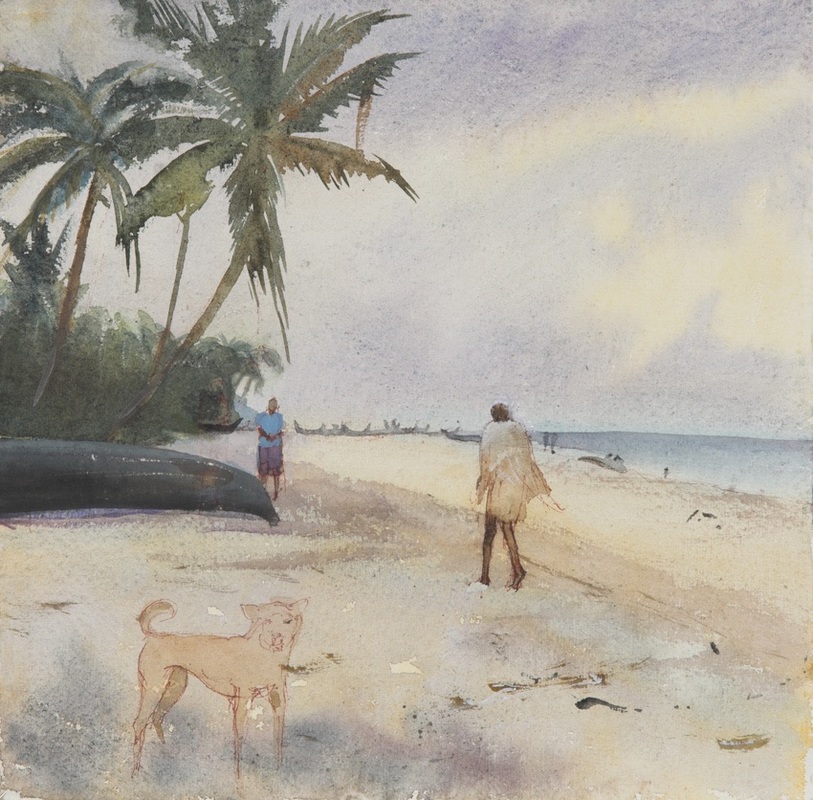
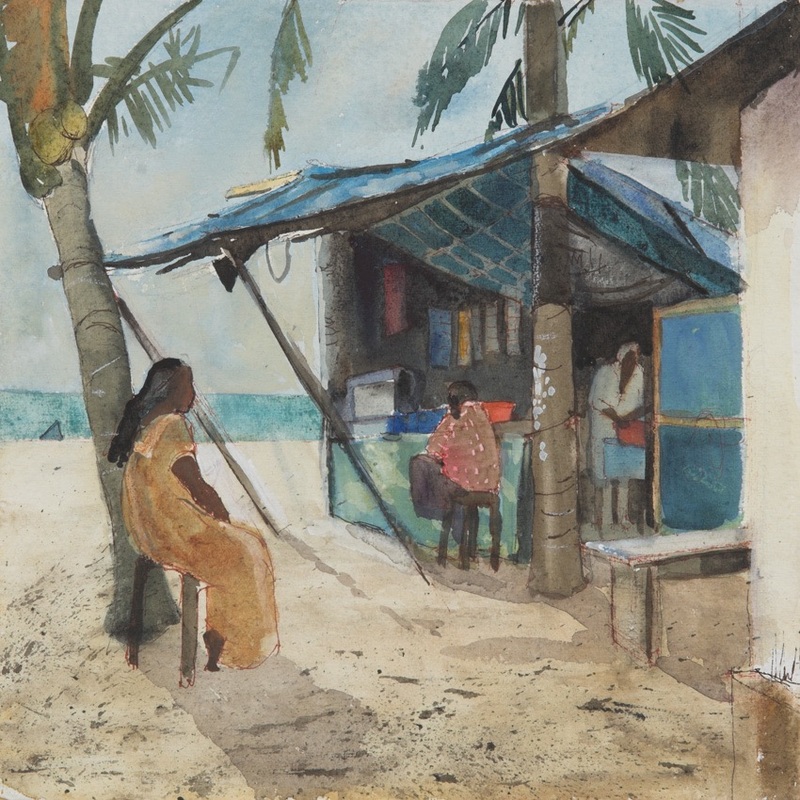
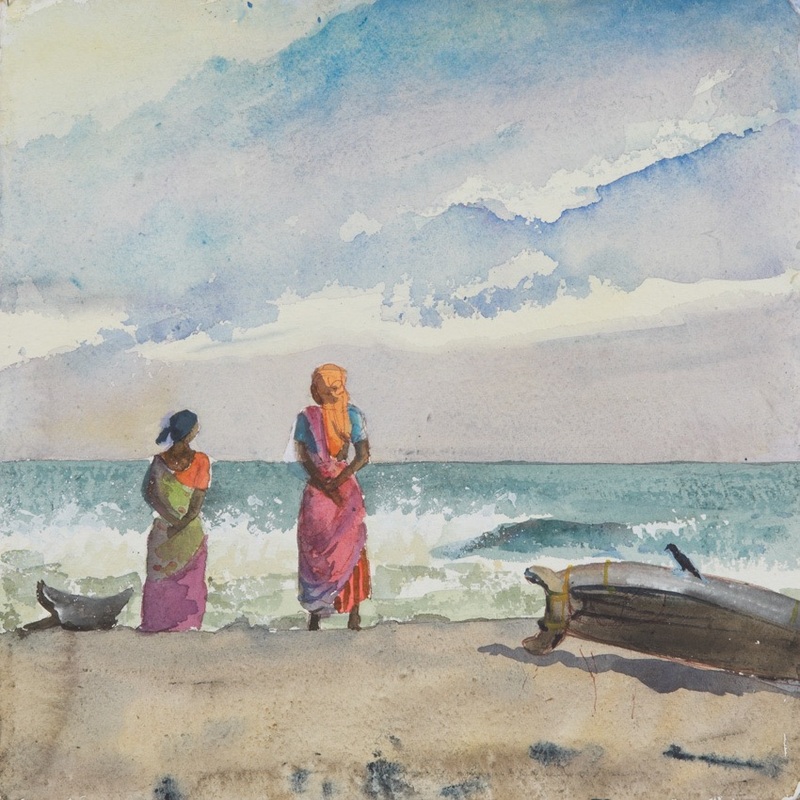
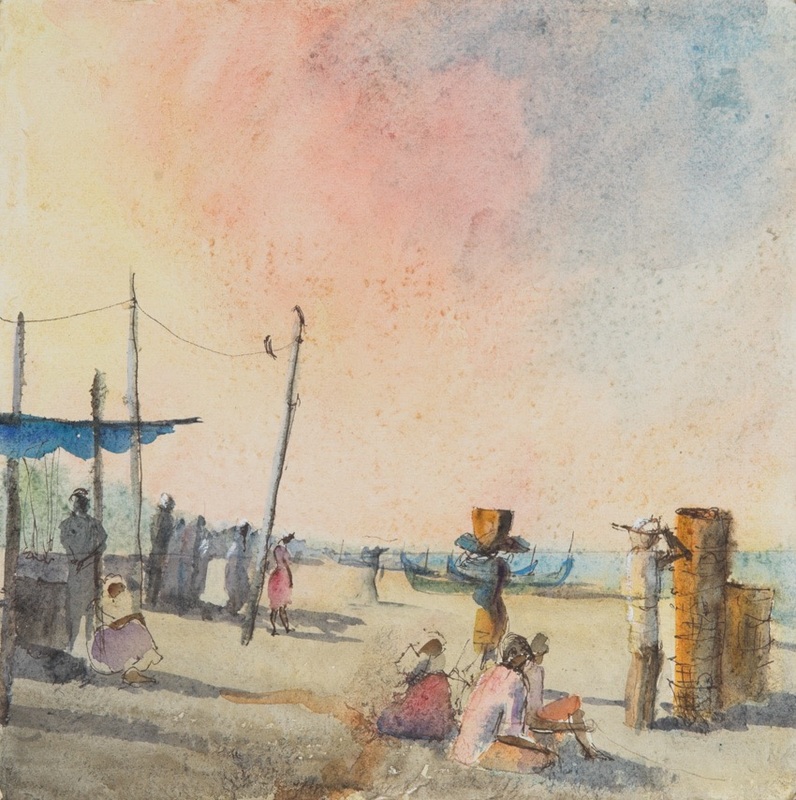
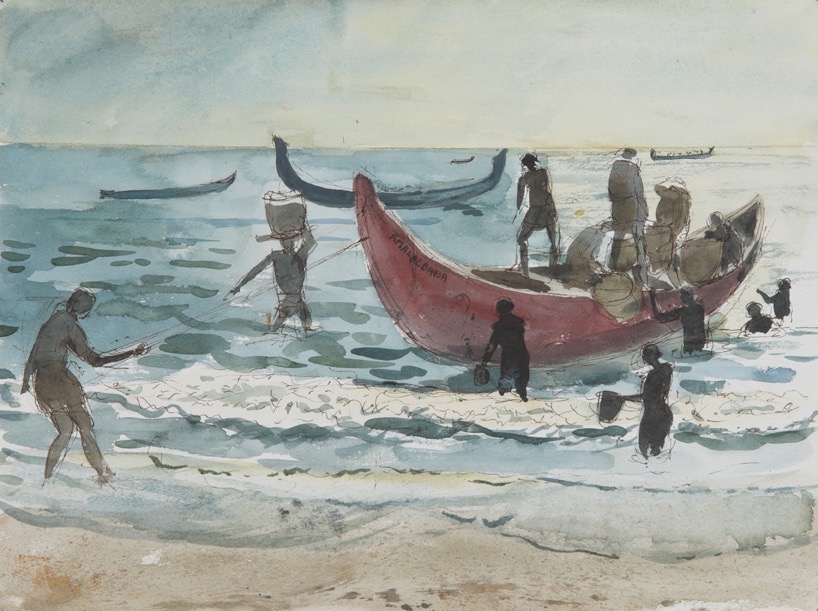
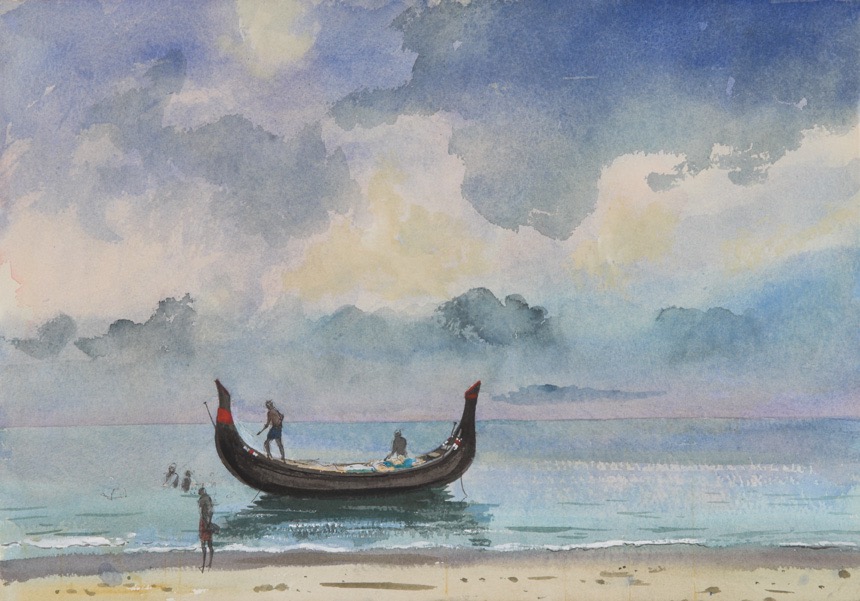
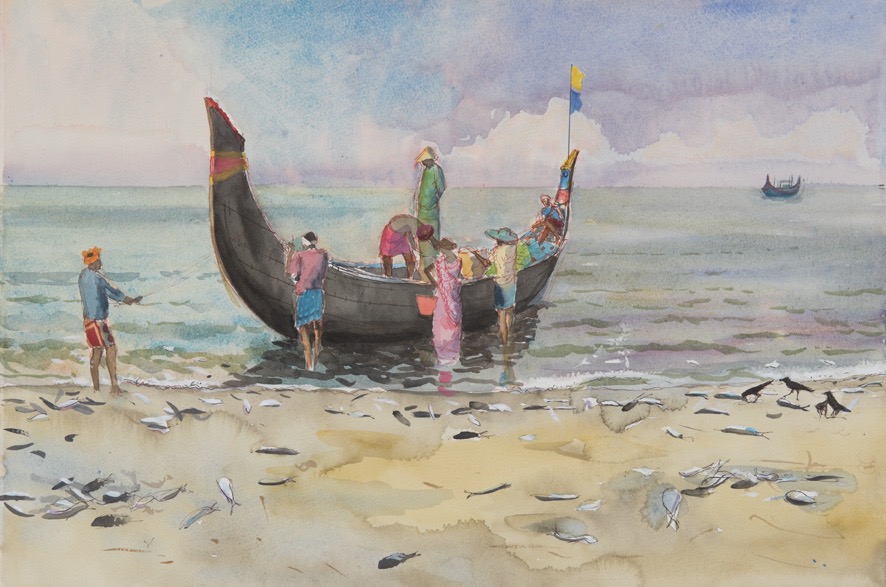
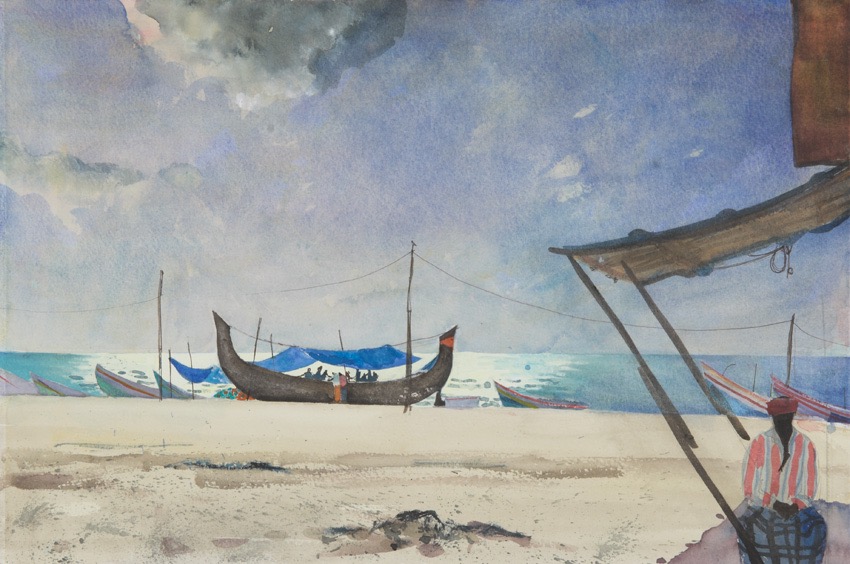
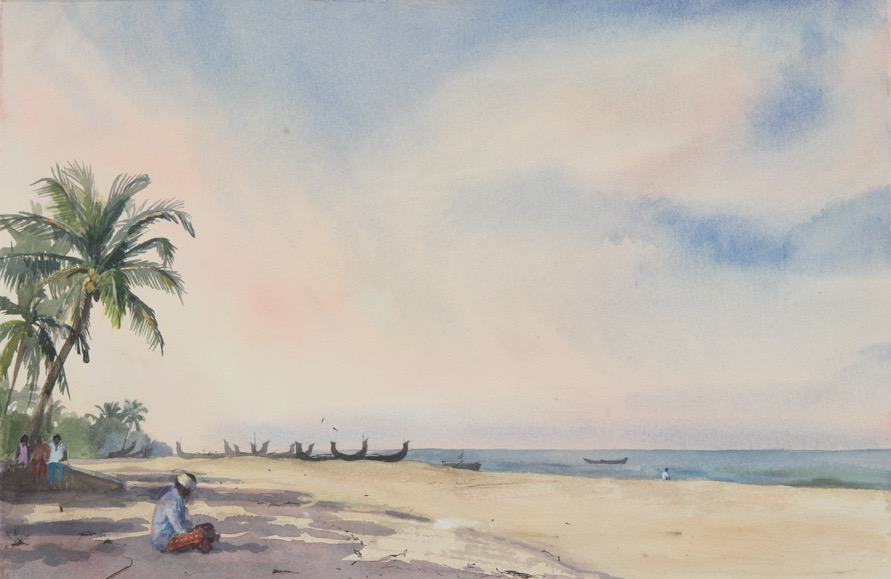
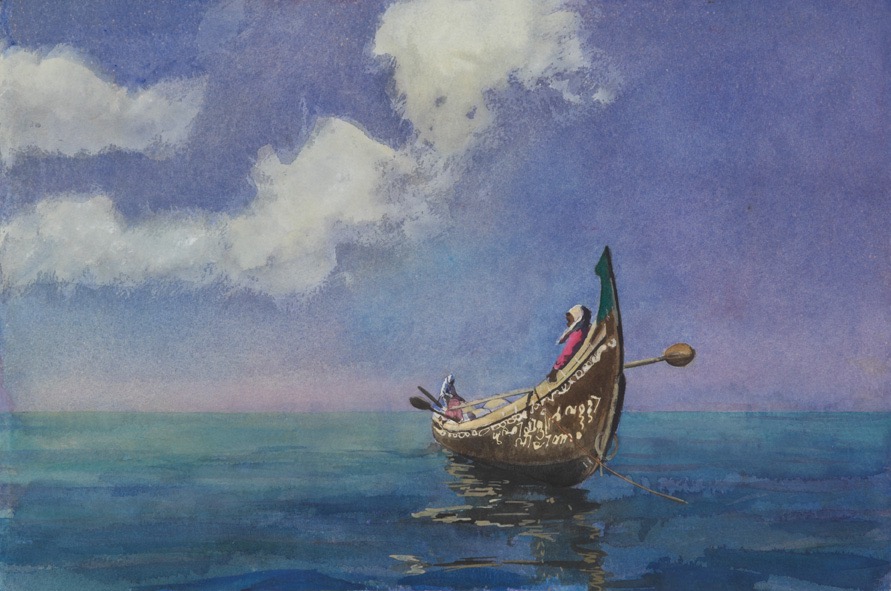
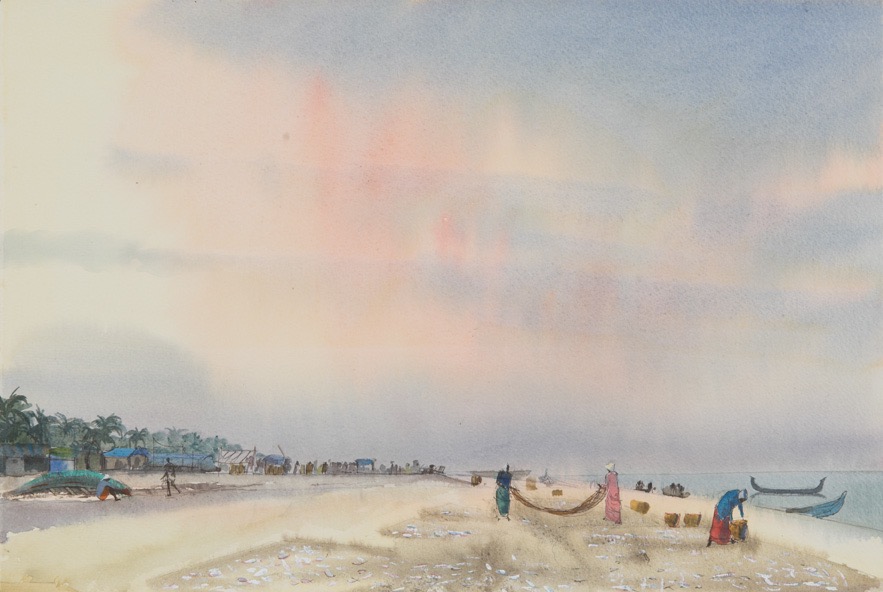
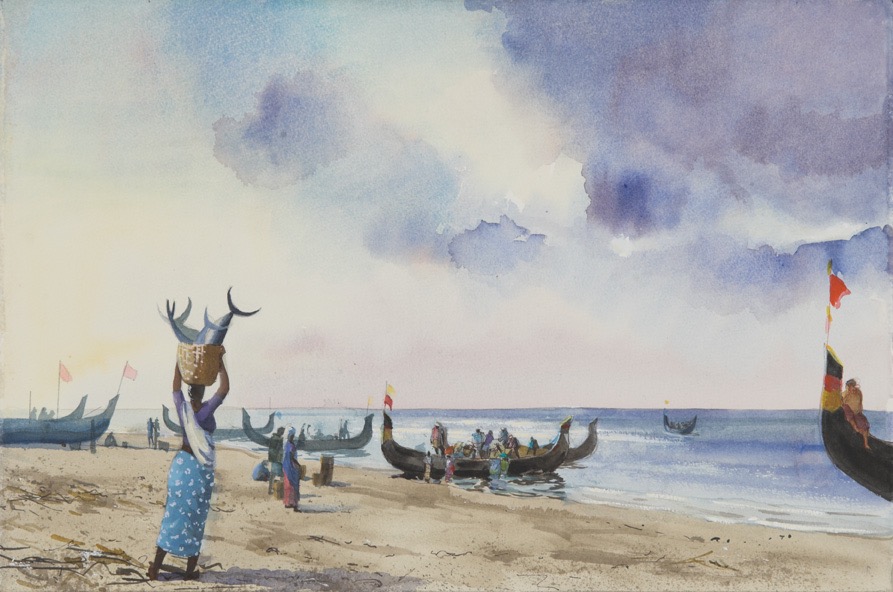
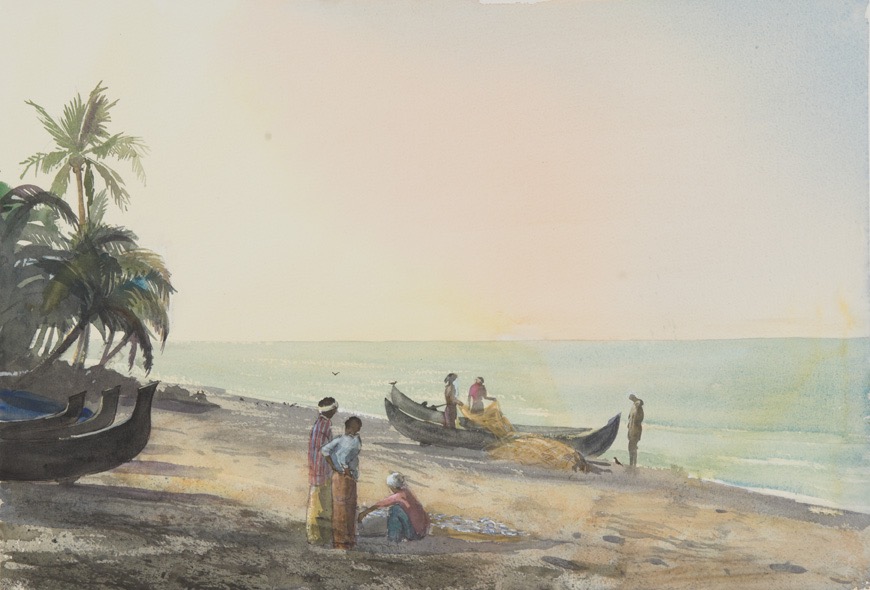
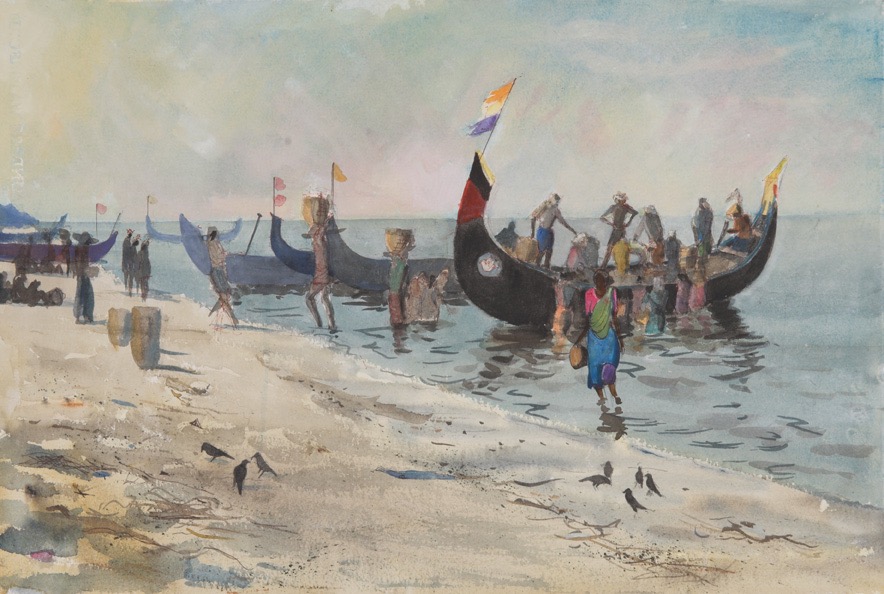
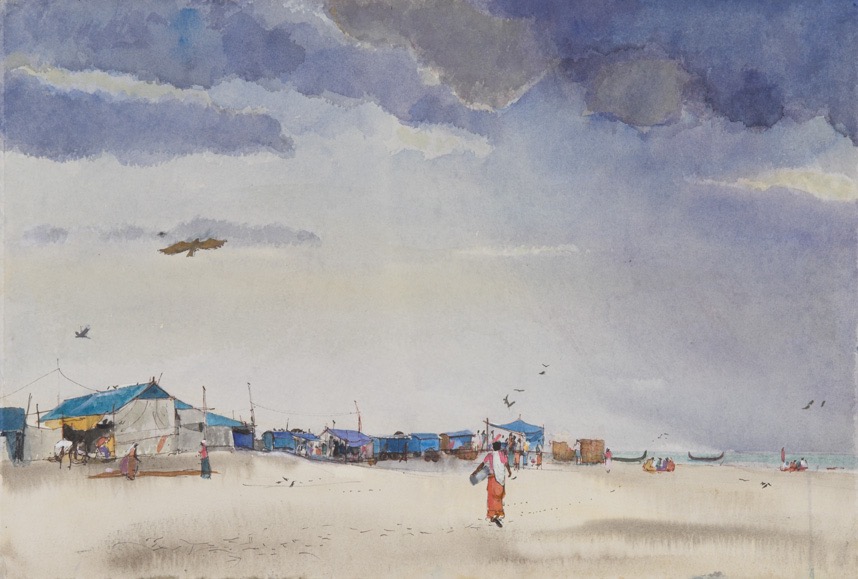
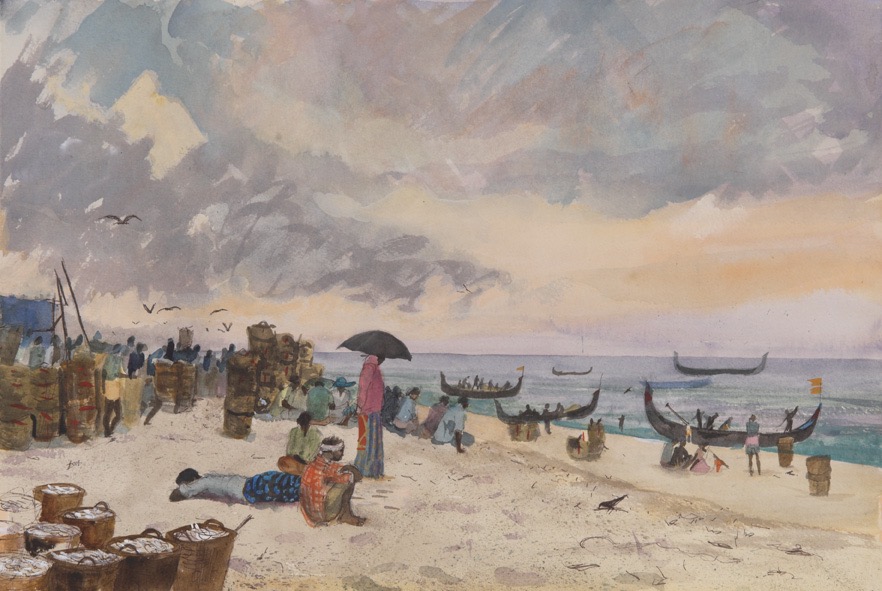
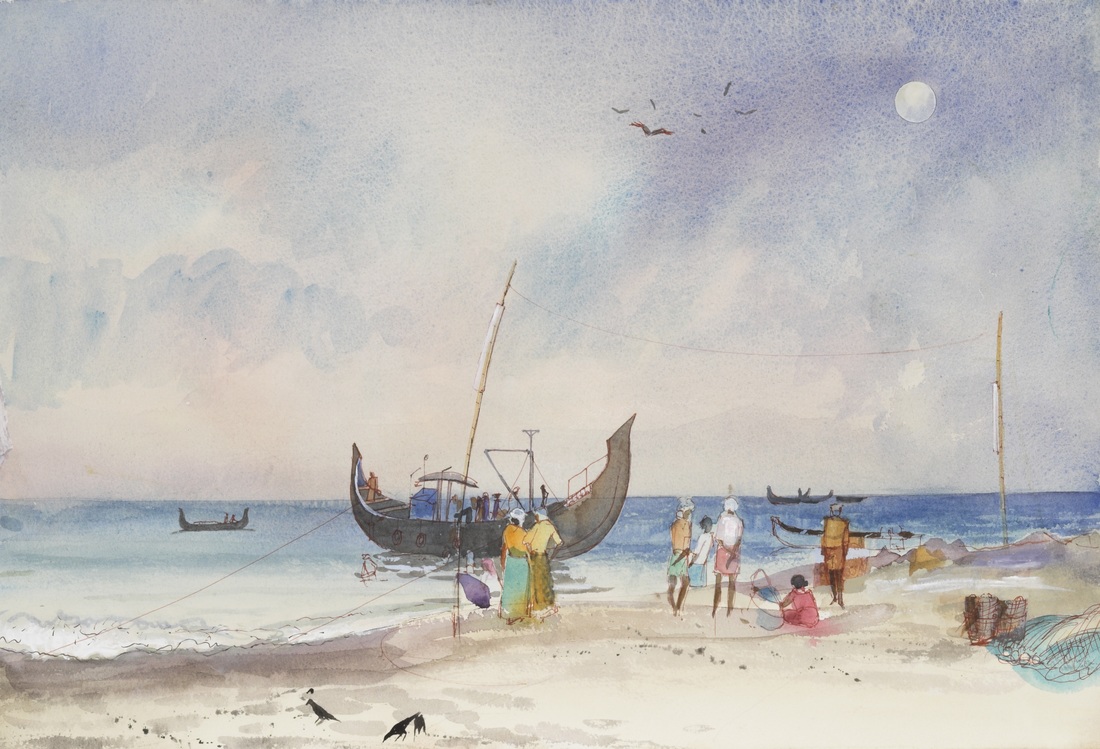
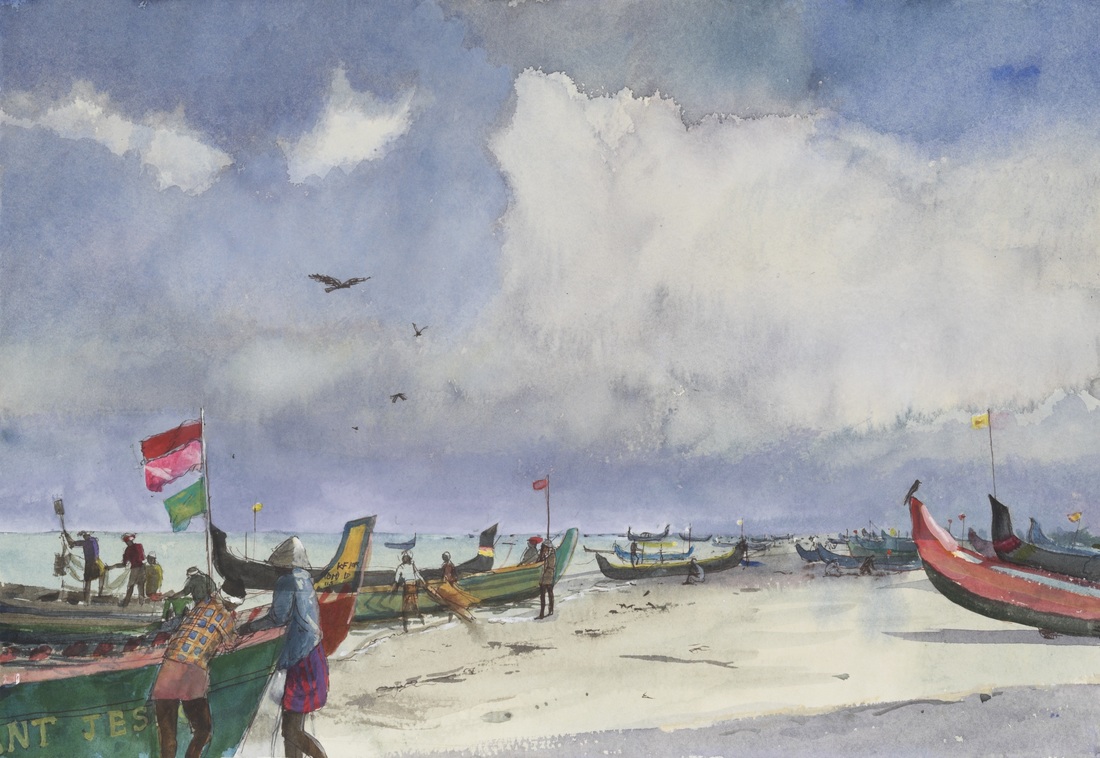
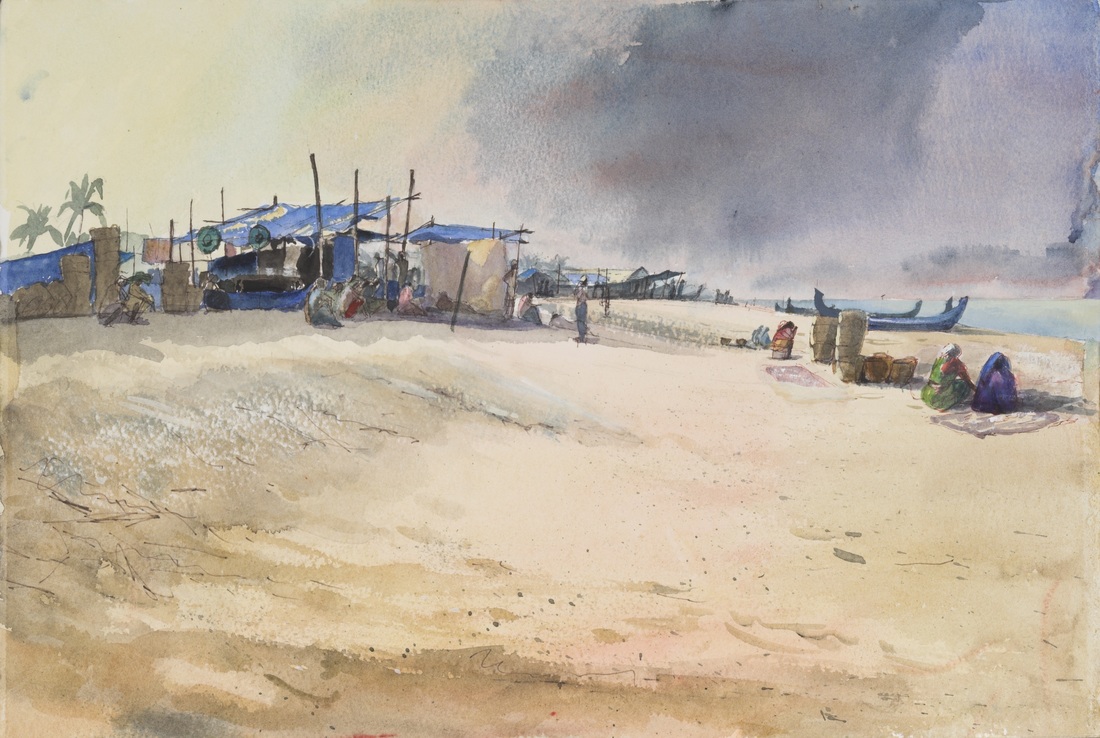
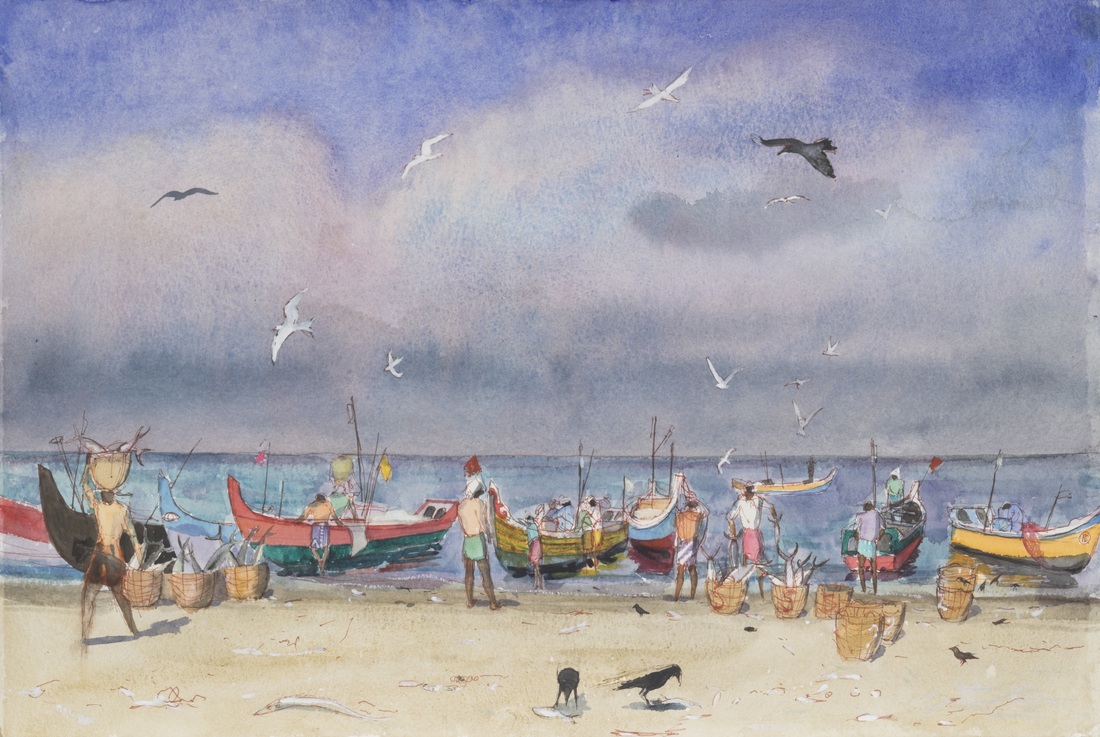
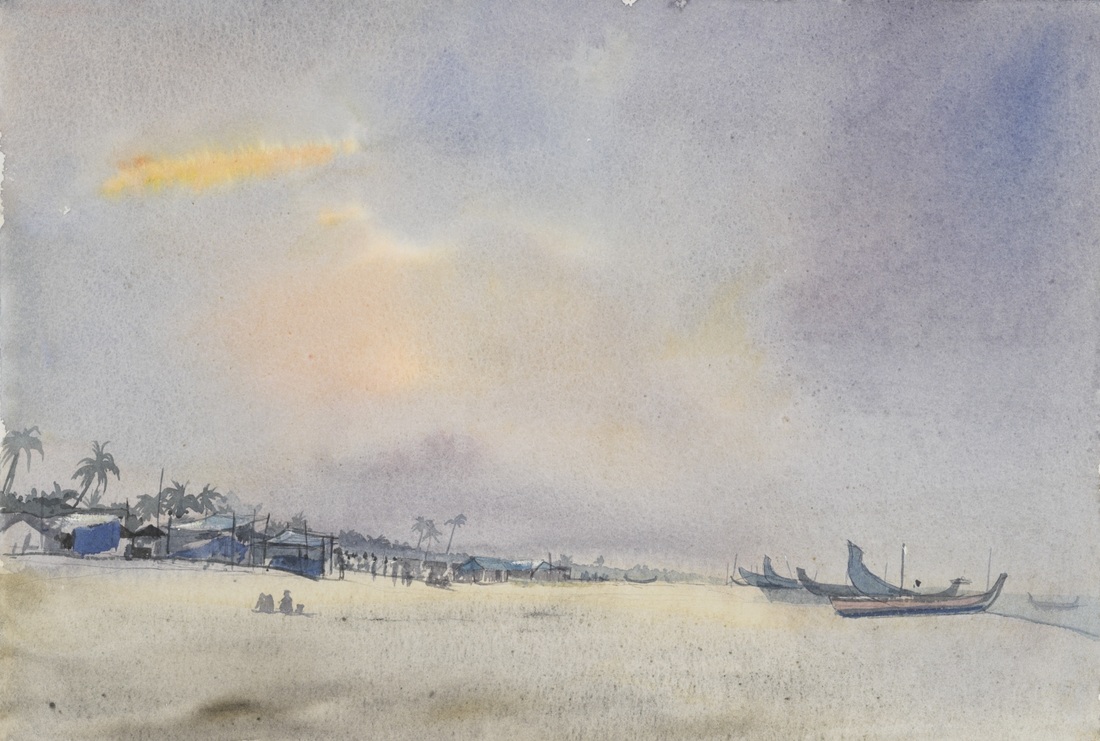
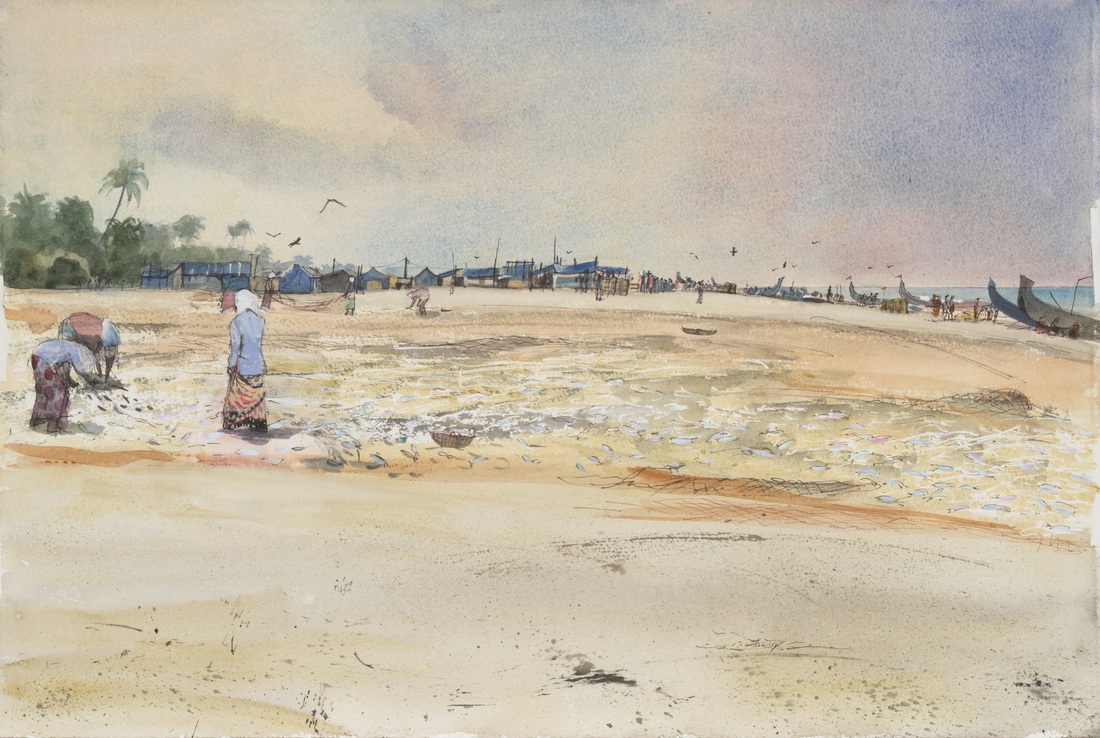
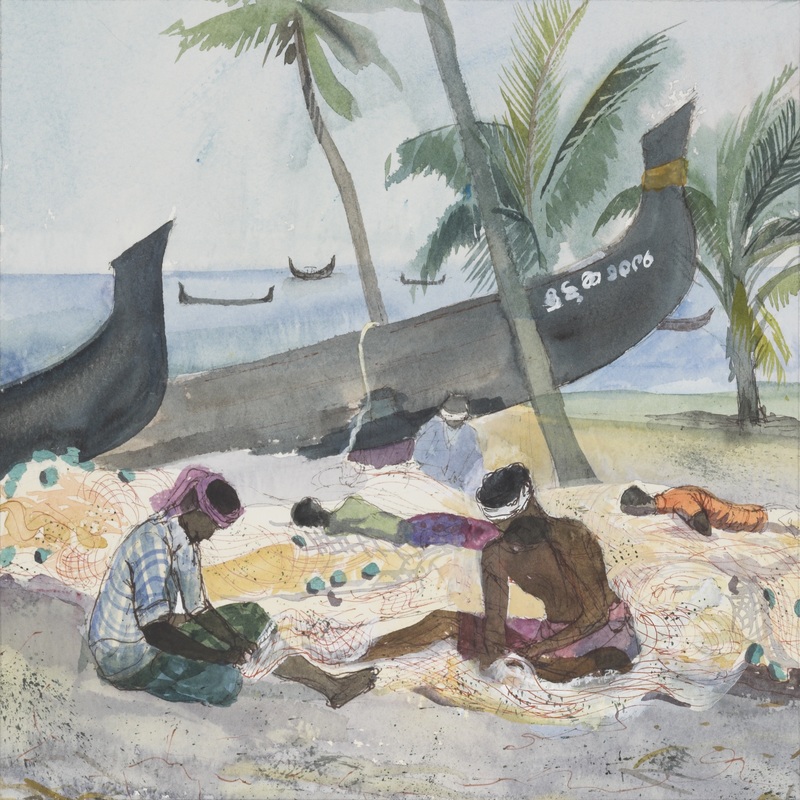
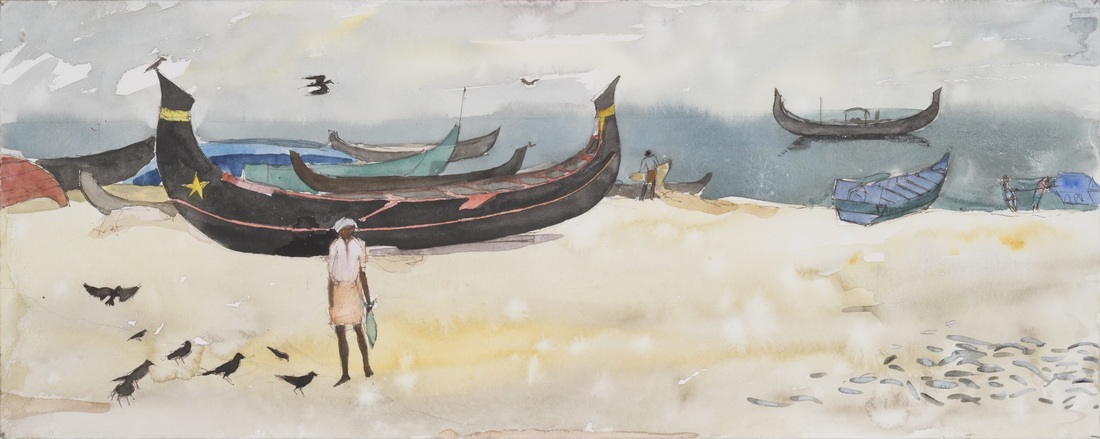
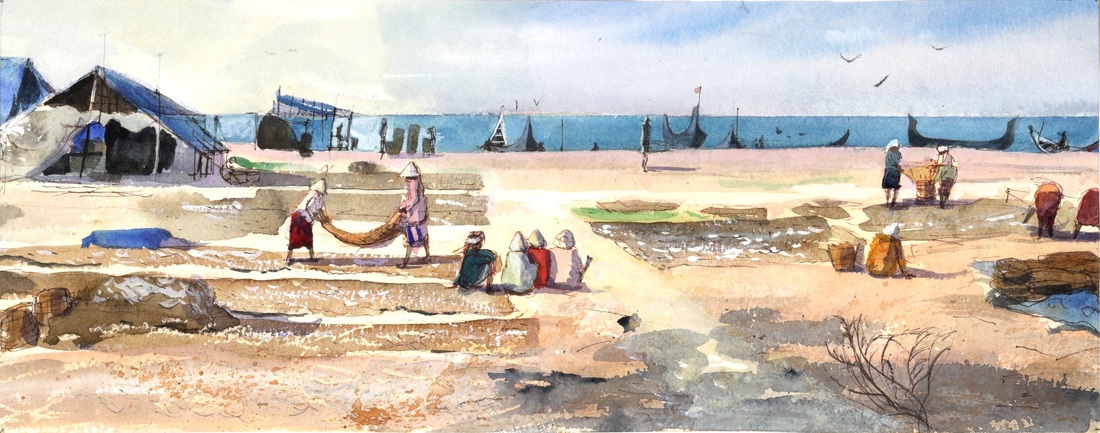
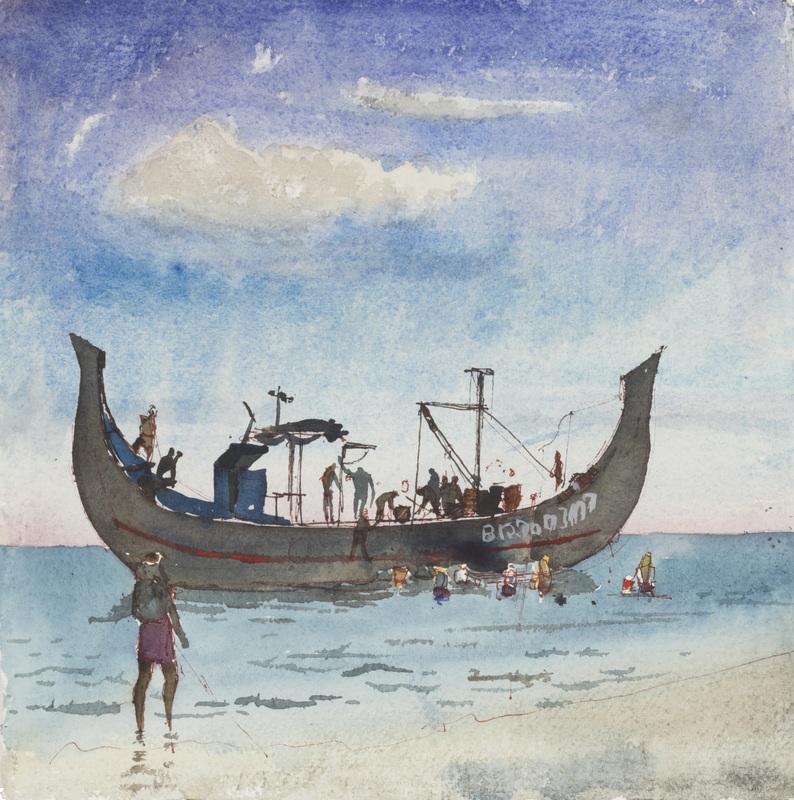
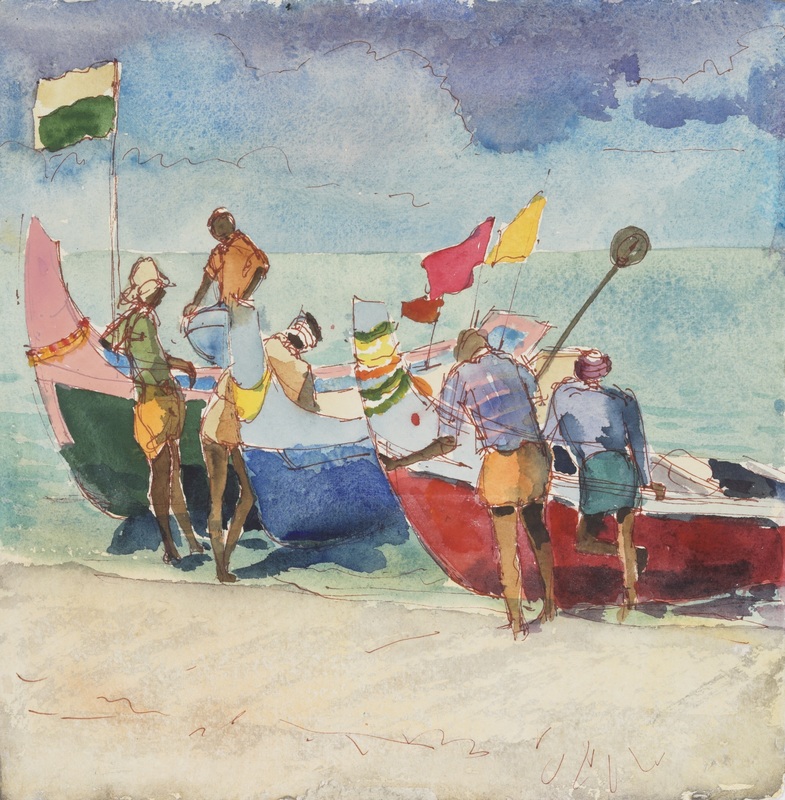
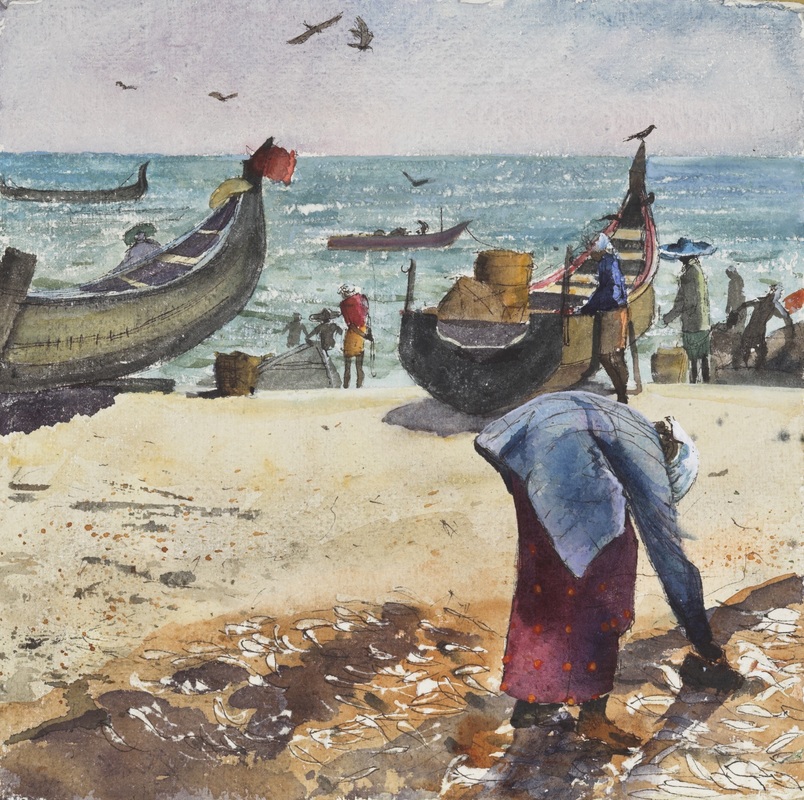
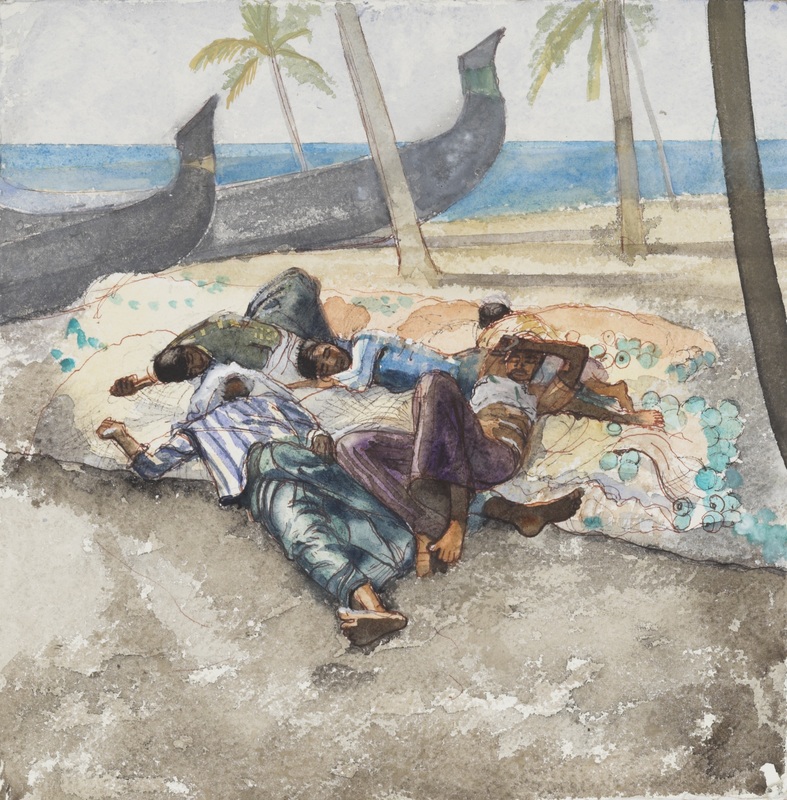
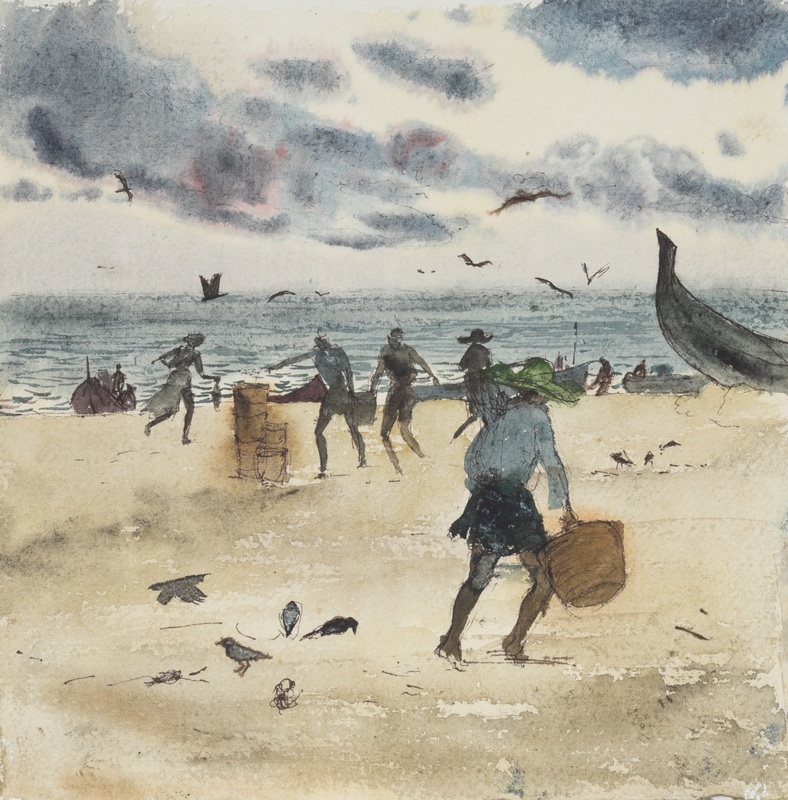
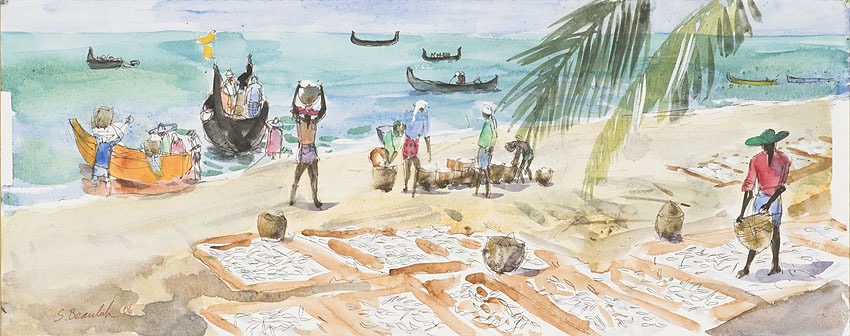
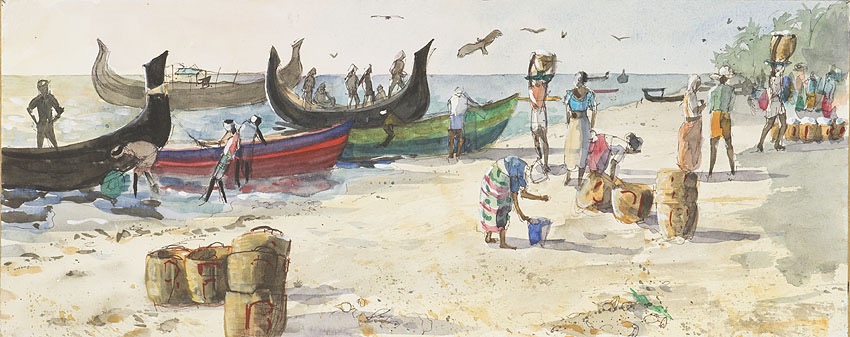
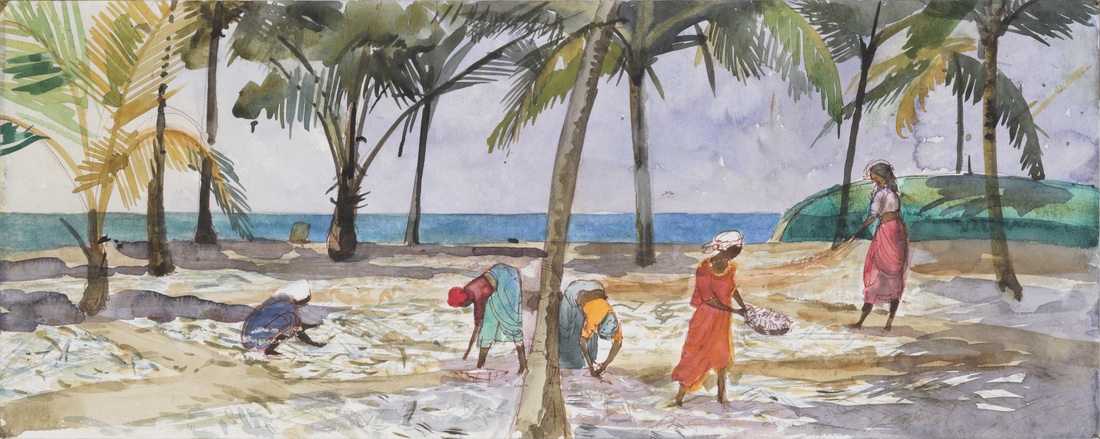
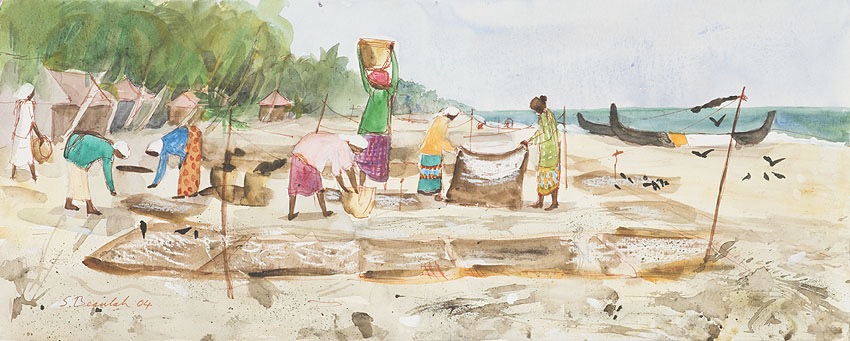
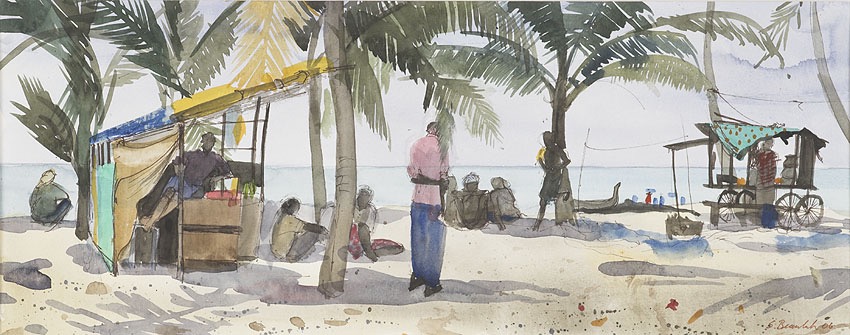
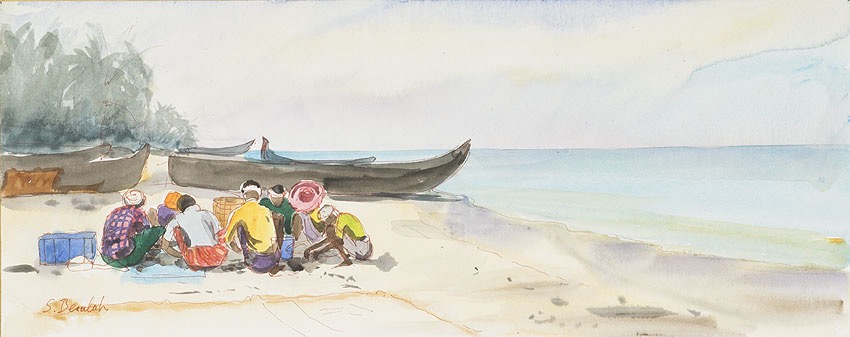
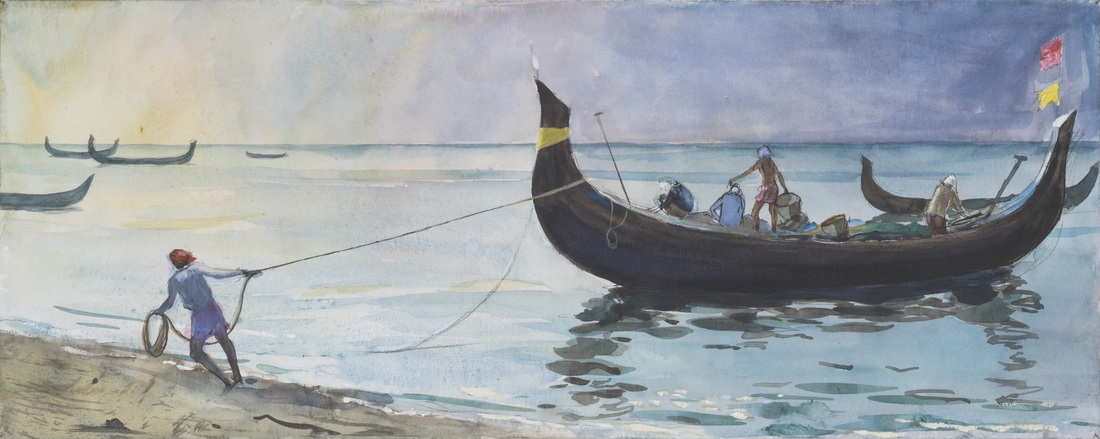
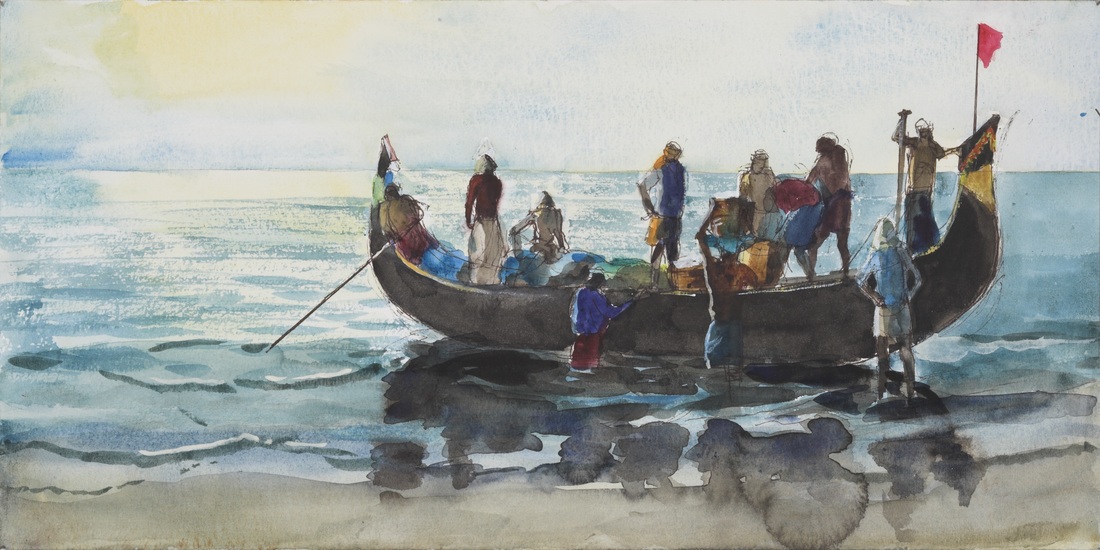
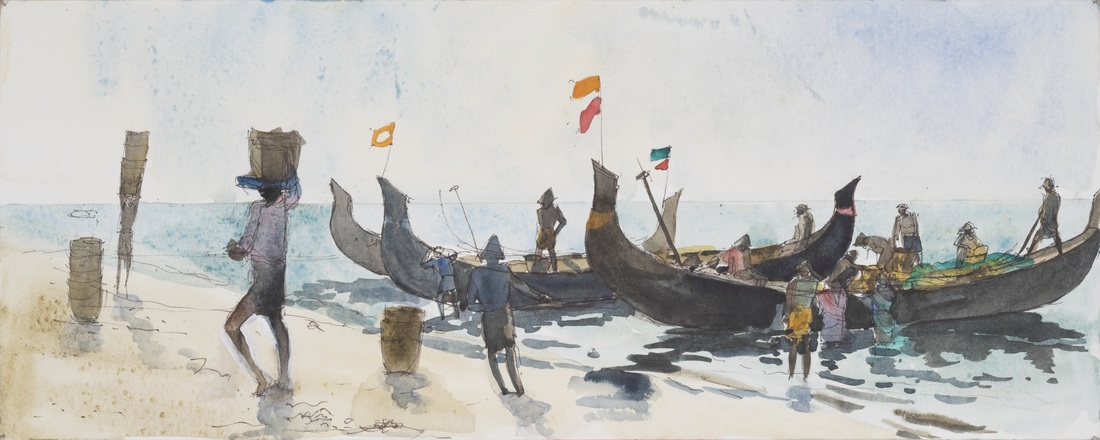
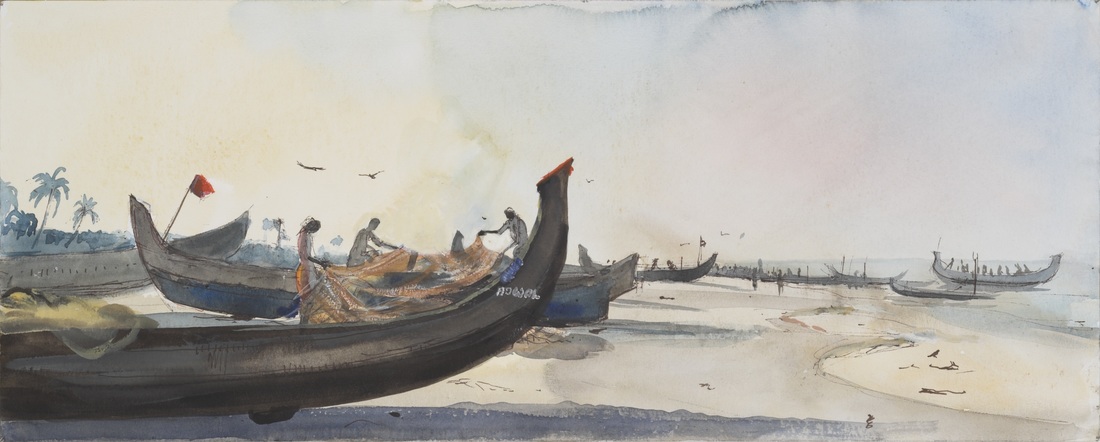
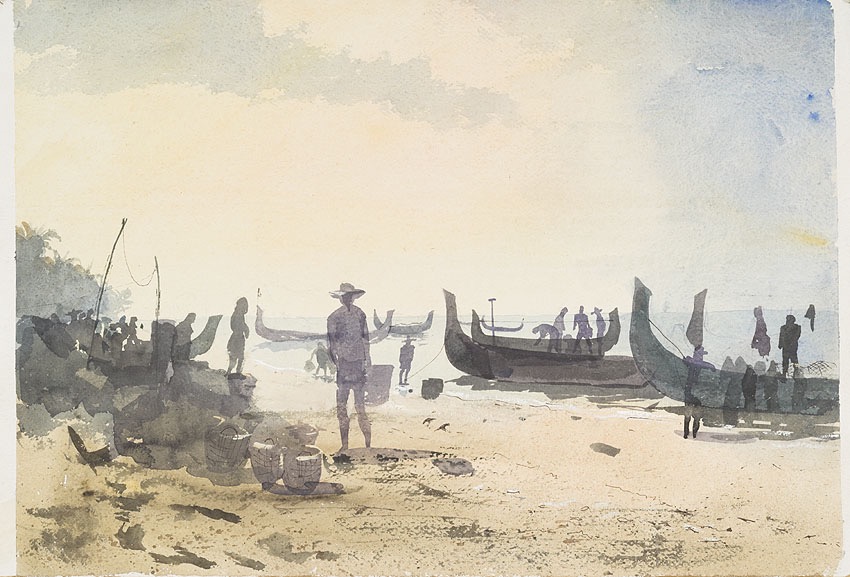
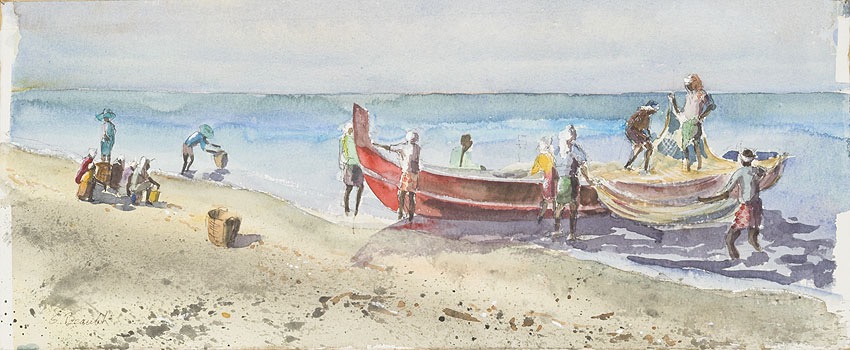
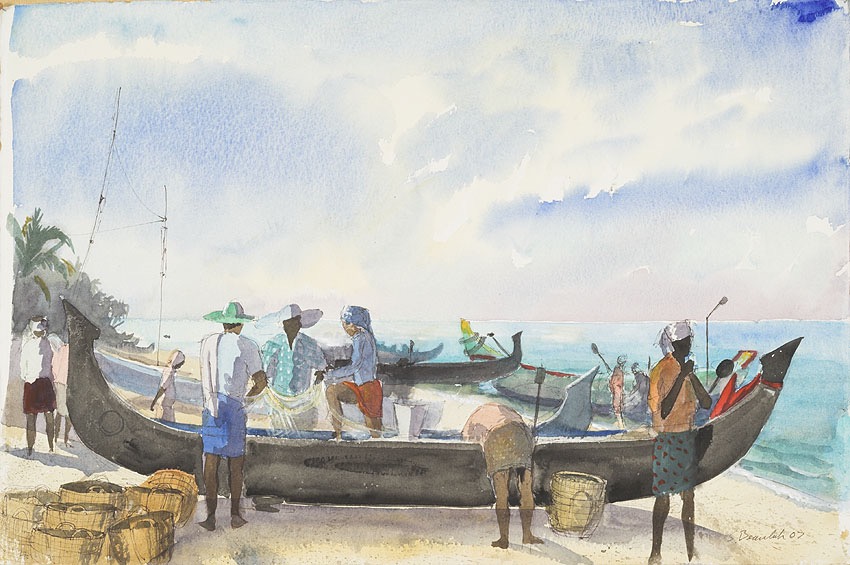
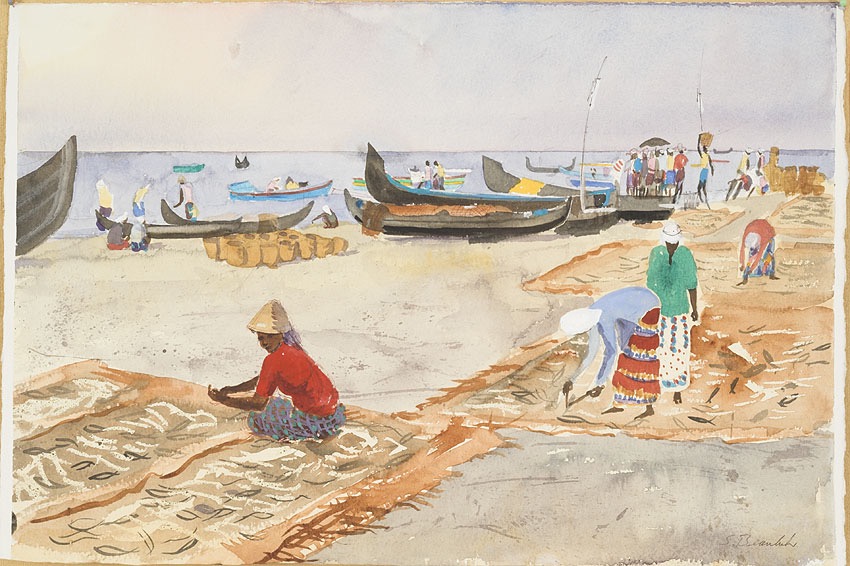
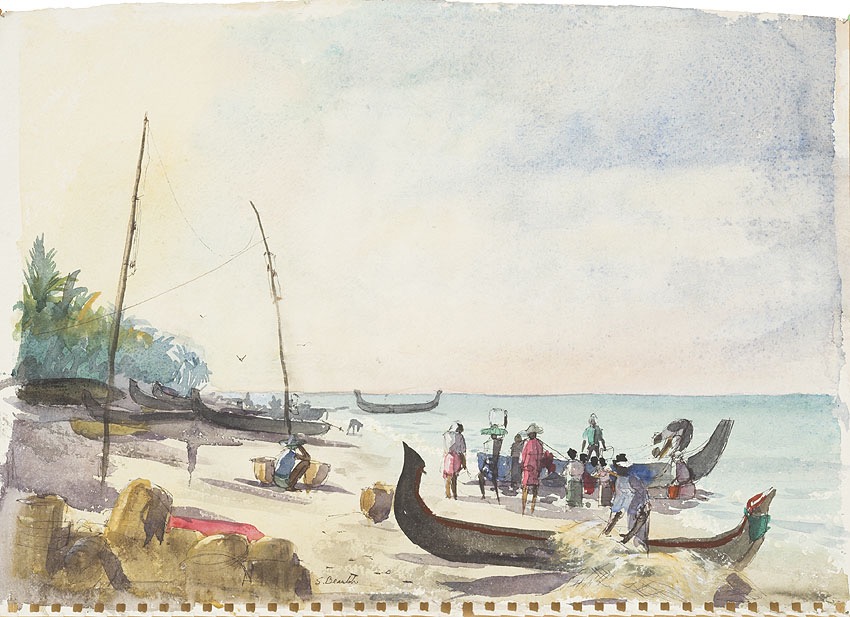
Susan Beaulah came across the Chakara quite by chance. Emerging onto a remote Kerala beach on a painting trip to India in 2001, she was delighted to find it bursting with life; the shore was lined with extraordinary, ancient-looking fishing boats and everywhere almost as far as the eye could see, people were landing, sorting and selling fish.
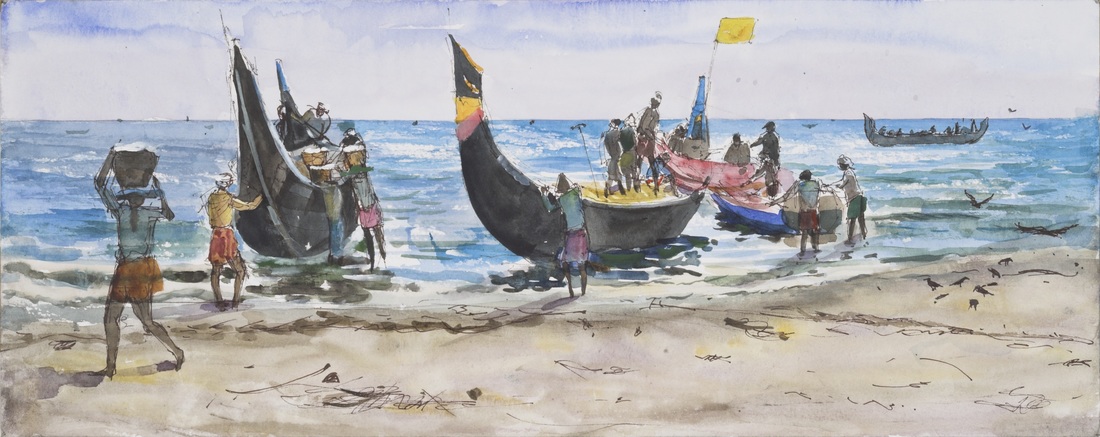
A wonderfully picturesque scene, the reality of the Chakara is also one of intense heat, noise and stench. Moreover overcoming the curiosity – occasionally even animosity – of the fishing community who were not keen to allow a female, foreign painter the space and peace to discreetly record their activities and lives. So vibrant and stimulating was the whole experience, however, that Susan was determined not to be driven away.
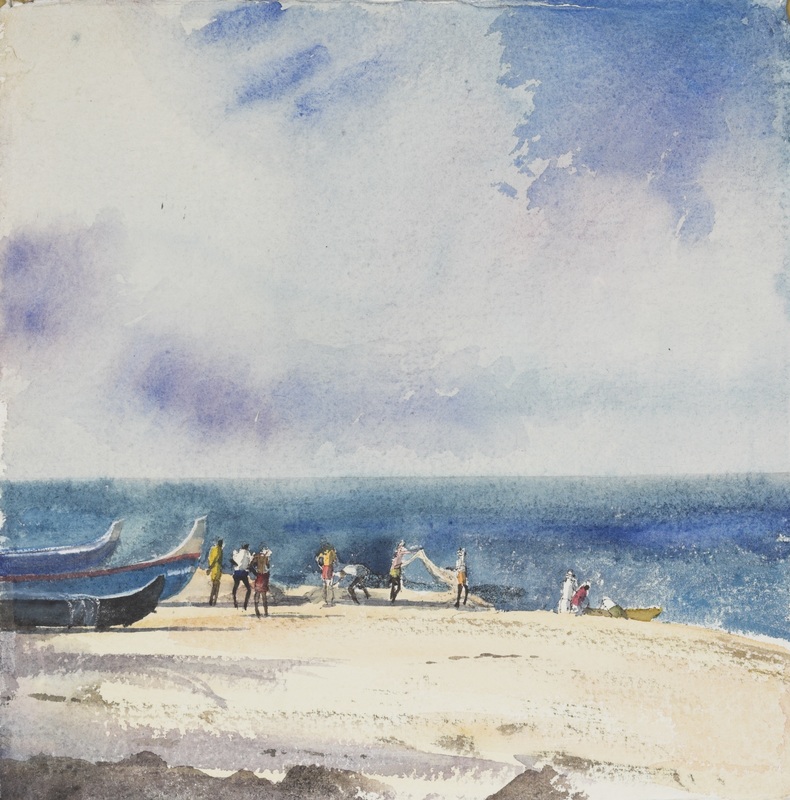
The following year she returned to the same beach and found herself faced not with the amazing fishing scenes but miles of empty sand; not a fisherman, let alone a fishing boat, in sight. Had it been a mirage or was she simply on the wrong beach? No, what she had previously stumbled upon was a fishing phenomenon known as the Chakara.
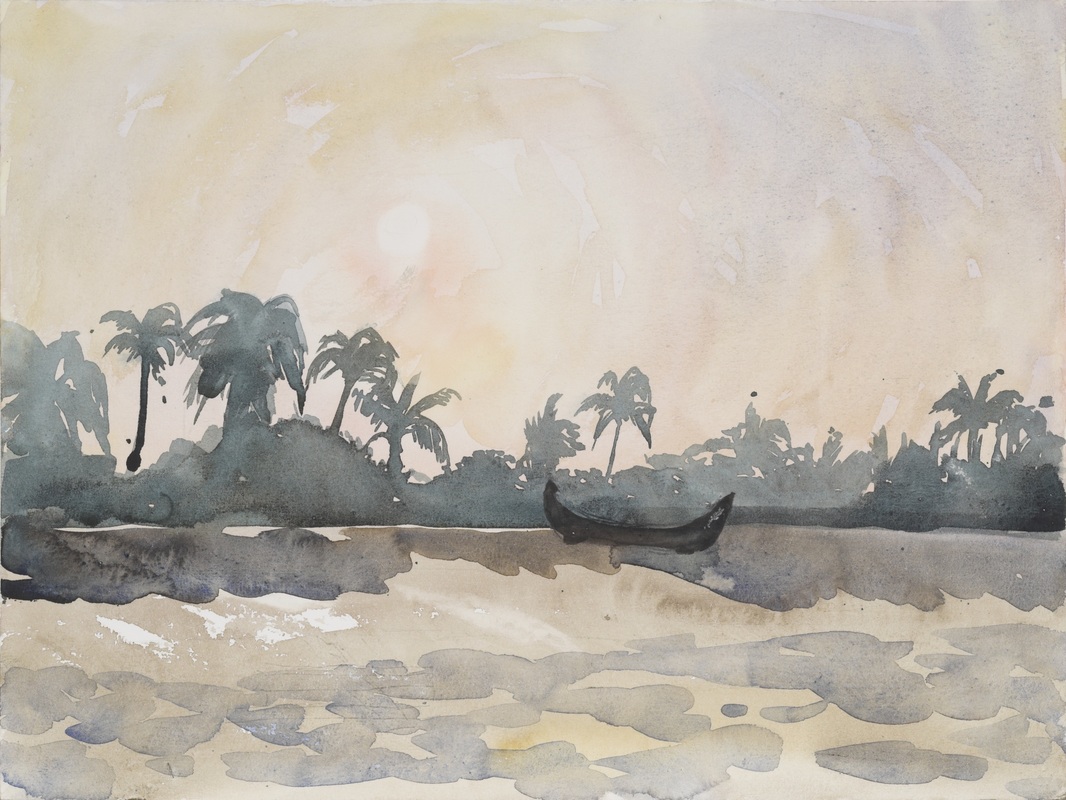
Kerala is a lushly exotic State of waterways where as many as 41 rivers and creeks form what is known as “The Backwaters”. Just how and exactly where a Chakara occurs is little understood, but it seems that during torrential monsoon rains, clays and silts are washed down from the mountains in huge quantities. These deposits, rich in silica and certain metals, are carried down the mountains by the rivers, as they break through the coastal mud banks en route to the sea. A chemical reaction then takes place between the river mud and the sea salts, which literally thickens the seawater. The unusual calm this brings to these normally turbulent coastal waters – as well as the oxygen and nutrients released from the clay – attracts huge numbers of fish and shrimps, creating the perfect environment for the eager fishermen. The ephemeral nature of the mud banks means that the position of the Chakara, which lasts only a few months at the most, changes from year to year.
Susan, with her driver and guide Babu, covered hundreds of miles of Kerala coast before rediscovering this illusive fishing community. Acclimatising herself to the hardships of the beach and negotiating a working relationship with the fisher folk has been a delicate and often nerve-racking experience. The extraordinary story of how she established a rapport is told in her illustrated book THE KERALA CHAKARA.
.